
Cultivating a Culture of Care: A PoP Up Session Reflection
PoP Up sessions are a space for network practitioners to dialogue about Problems of Practice.

In our PoP Up session on 25 February 2026, participants gathered to explore what it actually takes to build a culture of care in our network spaces — and what gets in the way. The session was designed and led by Tendai Angelina Mugabe, Bopa DiPeo Fellow, who brought both a clear framework, a deeply relational presence, and her personal experience to the conversation. What emerged was one of the richest dialogues we've had in this PoP Up series.
This session invited a reframe: care is not a feeling, but a set of intentional conditions — rooted in safety, trust, and shared responsibility — that enable honest participation and meaningful collaboration.
Most of us who work in impact networks have been shaped — whether we like it or not — by a professional culture that prizes efficiency, output, and measurable results. The dominant paradigm running beneath much of our institutional life is one built on separation, extraction, and accumulation. It shows up in how meetings are designed, how participation is solicited, how silence is interpreted, and how facilitators are expected to perform.
And yet, the premise of impact networks is a fundamentally different one: that human beings, like all living systems, are wired to flourish through cooperation. Interconnection and relationality are not soft extras — they are foundational and biological. We are social creatures whose nervous systems are designed to co-regulate with one another. In healthy networks, the collective nervous system of the group becomes a resource for individuals — one that signals safety, enables honesty, and creates the conditions for genuine collaboration.
When we gather people across organizations and sectors to work on shared challenges, we are not just running a programme. We are enacting a different set of values about what makes collaboration possible. Network leaders are offering a way of being together that honours what humans actually need in order to think, create, and act collectively.
What a Culture of Care Actually Is — and Isn't
The opening frame from Tendai set the tone for everything that followed.
"When I think about creating cultures of care, I don't think about being nice or gentle. I think about designing the conditions that make honest participation possible."
"Safety is not accidental. Belonging is not automatic. Culture is not the facilitator's job alone.” – Tendai Mugabe
In the way Tendai defines it, care is not only about emotional warmth, care is also structural. It includes clear framing and transparent expectations that point to intentionally balancing professional norms with relational practices. Cultures of care hold boundaries and confidentiality, emphasise curiosity over assumptions, protect minority voices, name power dynamics, and allow people to genuinely say yes or no. She was equally clear about what care is not: endless affirmation, avoiding tension, forced positivity, or the constant management of high energy.
Tendai described a shift in orientation that she sees as central to cultivating these conditions:
From controlling energy to cultivating safety
From performance to presence
From extracting participation to inviting agency
From assuming belonging to actively building belonging
Summing up her thoughts for fellow network practitioners, Tendai offered what felt like a mic drop quote: "Safety is not accidental. Belonging is not automatic. Culture is not the facilitator's job alone."
Culture Is What People Experience — Repeatedly
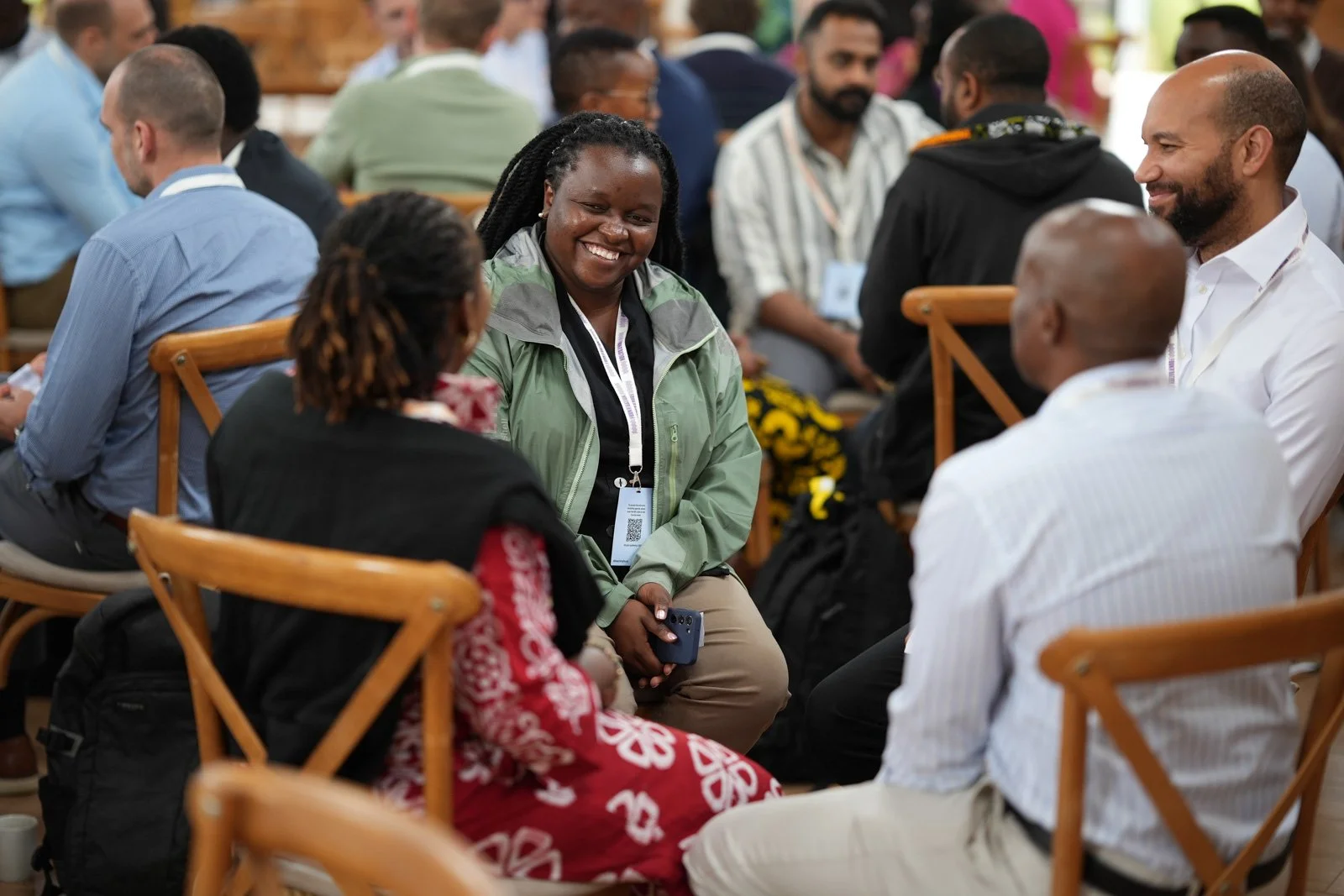
Tendai elaborated on her point about the collective nature of culture. Culture is not what we say we value; it is what people experience, consistently, over time. That means the culture of a network is not set by its stated principles or its facilitation style alone — it is co-created by everyone in the room, through every interaction.
"If culture is what people experience repeatedly, who creates those repeated experiences? Everyone. The group. How we show up and our behaviour."
This matters enormously for network practitioners. It shifts the question from "how do I create the right conditions?" to "how do we all take responsibility for what we are making together?" Participation, Tendai noted, is not about equal airtime. It is about shared responsibility for the room.
Understood through the lens of collective nervous system dynamics, this makes deep sense. Every person who enters a shared space contributes signals that accumulate into what we call culture. When enough signals consistently communicate safety, respect, and genuine care, the group's nervous system settles. People can think more clearly, take more risks, and engage more honestly. When those signals are inconsistent or threatening, the nervous system braces, and participation contracts accordingly.
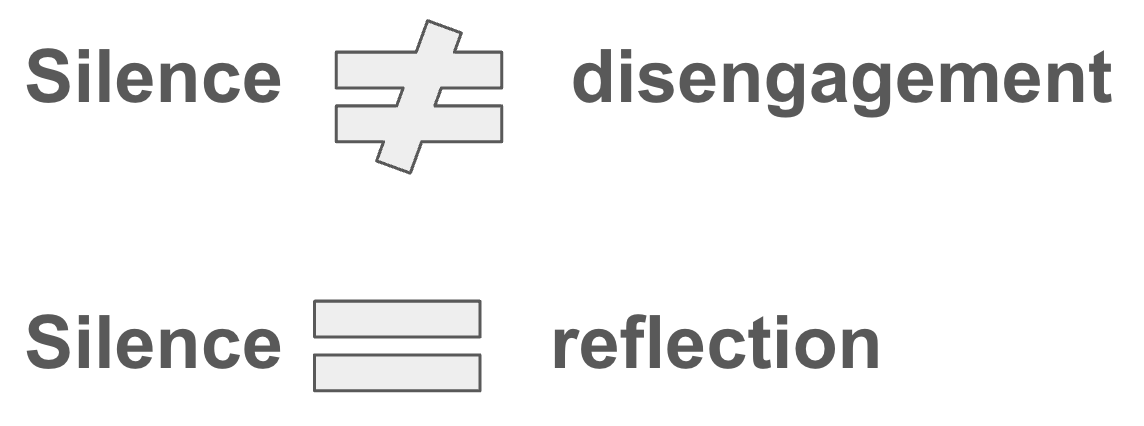
Tendai also offered something that had clearly come from her own facilitation experience: that silence, so often read as disengagement, can in fact be reflection. That reframe — from "quiet equals not participating" to "quiet might be processing" — is a small shift with significant implications for how we design and pace our sessions.
Participation Follows Trust
Tendai drew on her work with the Africa Women Financial Inclusion Initiative to illustrate how care creates the conditions for honesty — and how honesty enables the kind of learning that actually shifts behavior, practice, and ultimately systems.
In facilitated labs with women exploring financial inclusion, surface-level conversations dominated at first: saving strategies and practical tips. It was only after the team explicitly named that financial mistakes were welcome in the room that deeper stories began to emerge — stories about debt, family pressure on savings, businesses that had failed, and savings groups fracturing under mistrust.
"Those stories didn't emerge because we asked better questions, they emerged because the conditions changed. Care enabled honesty, honesty enabled learning, and learning enabled participation."
This sequence — care → honesty → learning → participation — is worth sitting with for any network practitioner. It suggests that the quality of engagement we often chase through clever facilitation techniques is actually downstream of something more foundational: whether people feel genuinely welcome to show up truthfully.
Tendai named the conditions that make that possible:
purpose is clear,
expectations are transparent,
dissent is safe, and
contributions are acknowledged.
And, she named the culture disruptors that quietly dismantle openness:
ambiguity and half-truths,
fear of conflict,
jumping to fixes before understanding,
cliques and side conversations, and
pushing instead of pausing.
Permission to Be Human
A recurring theme among the network leaders was the pressure they feel as facilitators to perform wellness, hold energy, and maintain a kind of professional polish that paradoxically undermines the very culture they are trying to build.
"Facilitating is not about being nice. It's about designing spaces where everybody can show up — and that includes the person facilitating."
–PoP Up Participant
As one participant put it, "As a facilitator, I haven't been very good about modeling, giving permission to be human. I find that it's too much in conflict with all the other things I need to be doing to hold the space."
And yet, the examples shared by participants told a different story. When facilitators named their own limitations — "I'm showing up at 50% today, but I'm here because this matters" — something shifted in the room. People relaxed. Permission spread.
One participant reflected, "I feel like I'm really good at giving permission to other people. What you said reminded me how important it is to give permission to myself — and then to share that, so the group can hear it."
Another participant put it simply: "Facilitating is not about being nice. It's about designing spaces where everybody can show up — and that includes the person facilitating."
Together, we came to an honest reckoning with what it means to design for real humans — it’s not the 100%-capacity, full-attention version of participants we tend to imagine when we are planning a session.
As one participant put it, "We're not designing for a room with fracture and rupture. We're designing for perfect humans — because we assume we're going to be a perfect human when we get there."
Rather than imagining perfection, we can leave room for our humanity, for people to be enough as they are, with good intentions, without apology.
The antidote is not lowering standards. It is, as the group articulated, designing for repair rather than perfection — creating the conditions in which mistakes, misunderstandings, and imperfect days are part of the expected landscape, not exceptions to be managed away.
What Participants Are Taking Forward
We shared intentions to strengthen the spaces we’re in as facilitators, and we invite you to try along with us.
Model permission. Name how you are showing up before you ask others to. Let the group see that imperfection is not disqualifying.
Get clear on what care looks and feels like for your group. Care is subjective. Don't assume a shared definition — make it explicit, together.
Don't coddle, but don't abandon. Care includes accountability. When people don't show up well, the response isn't to ignore it — it's to address it in a way that maintains safety for everyone.
Notice what your "good facilitation" might be undoing. Some of the things we do in service of care — going around the room, ensuring everyone speaks — can inadvertently expose and pressure people. Practice tuning in to what’s wise in the moment rather than relying on “best practice.”
Ask yourself what connects you to this space. When you're connected to your own why for being in the room, you give yourself permission to show up as yourself, and that becomes contagious.
Designing for Repair, Not Perfection
A community is not a collection of perfectly regulated people. It is a collection of nervous systems, histories, projections, and healing journeys trying to exist in the same space. Everyone will make mistakes. The question is not how do we avoid mistakes. The question is: do we have the capacity and commitment to respond well when the inevitable happens?
This capacity to respond may be the most honest measure of a culture of care. It’s not the absence of friction, but the presence of enough trust and relationality that friction doesn’t become fracture.
For those of us facilitating impact networks — creating conditions for people to take collective action on challenges that no single organization can solve on its own — this question deserves to sit at the centre of how we design every gathering.
Thank you to Tendai Angelina Mugabe (Director of Programs & Impact at the Africa Women Financial Inclusion Initiative) for designing and leading such a generative session, and to everyone who brought their thinking, their stories, and themselves to the conversation.
Subscribe to our monthly newsletter to stay connected to future PoP Up sessions and ongoing conversations in this community.