
INSIGHT 3 OF 6 • PATHWAY: PEER
Relationality is the difference that makes a difference
The personal touch: the way mentorship moves
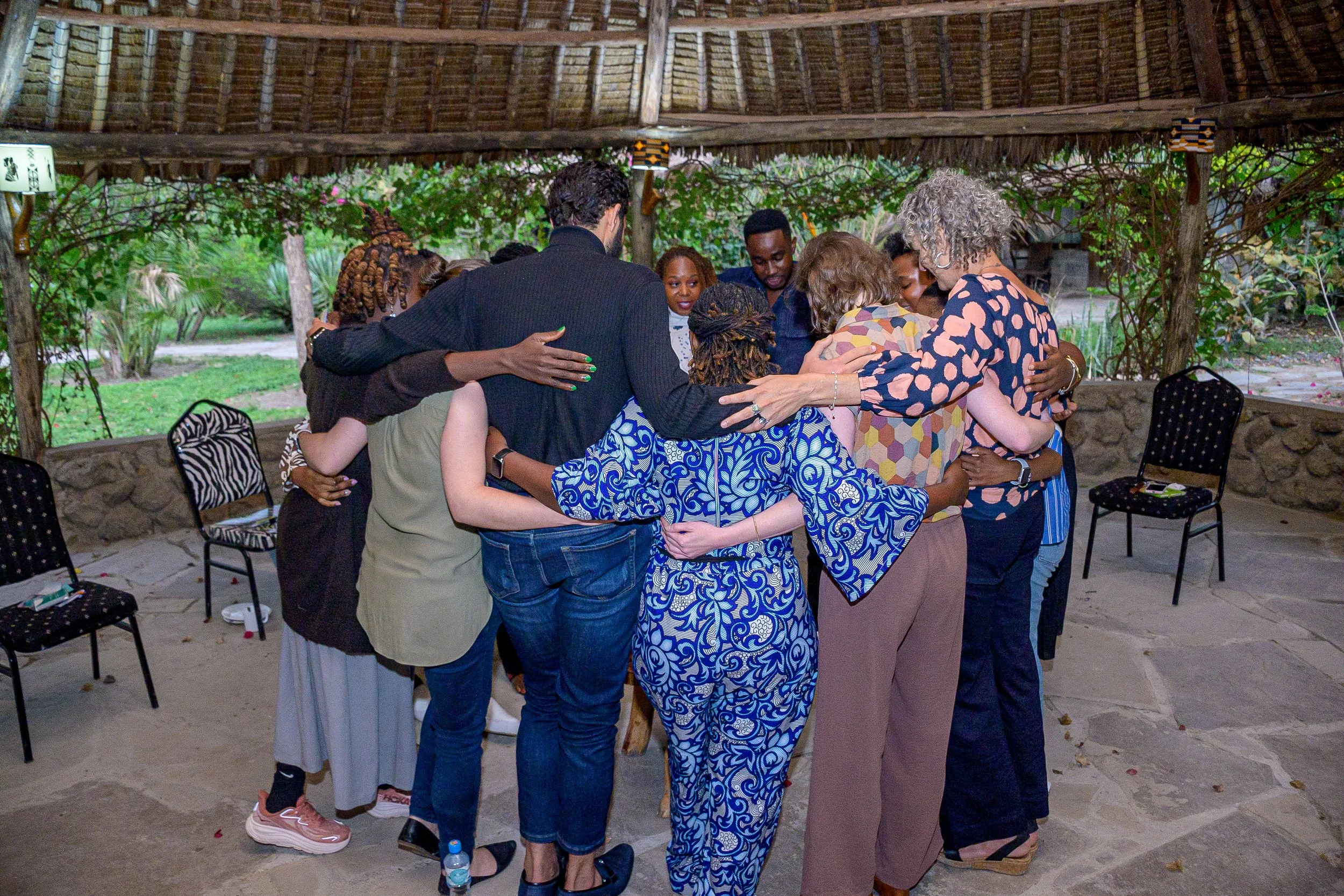
The fellowship created a high-trust “greenhouse” for growth by pairing intentional knowledge transfer with deep human accompaniment. A dense, reciprocal web of relationships combined with personalized support created conditions for inner transformation and applied learning.
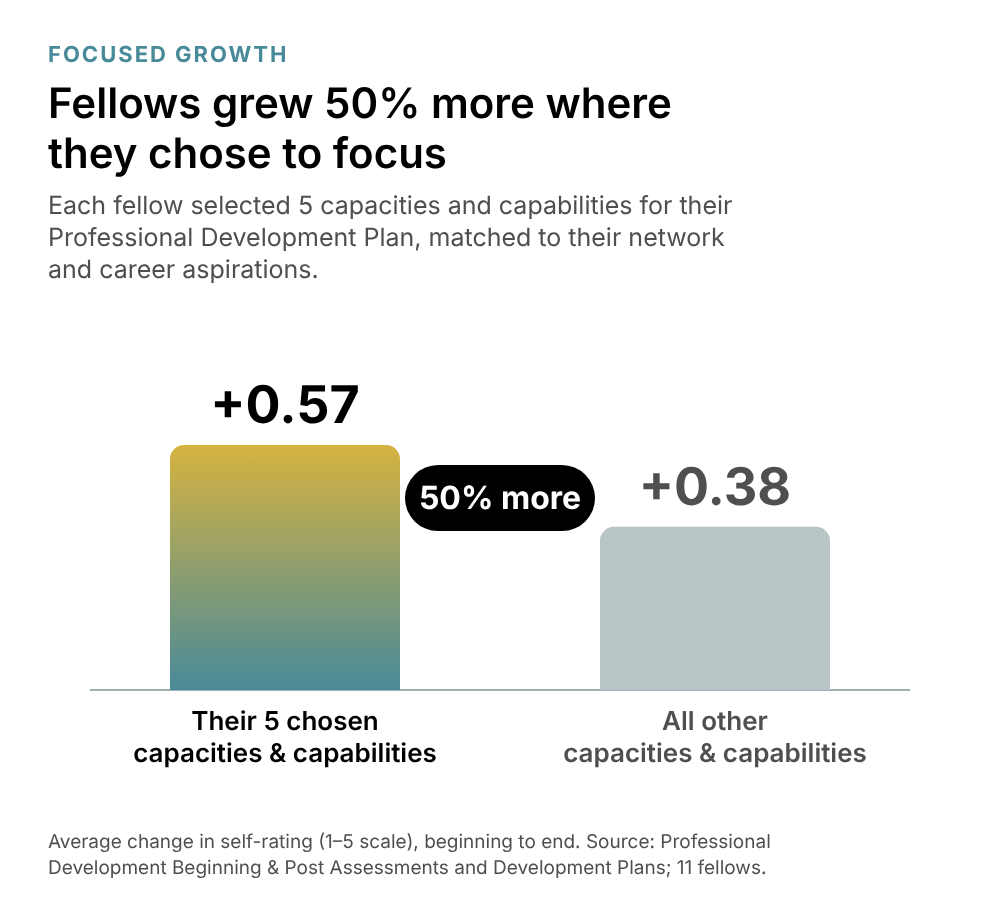
Fellows point to the importance of facilitators modeling a culture of care and the program’s weaving of content and relationality. With highly curated individual advising, experiential learning, and guide support, fellows showed roughly 50% more growth in the areas they deliberately chose to focus on in their professional development plans.
Relationality is the difference that makes a difference when it comes to strengthening capacities for leading in complexity.
~50%
more growth in the focus areas fellows chose for their professional development plans
#1 Driver
of growth, according to fellows: their peers
70-90%
of fellows practiced each of the five modes of connecting we measured
EVIDENCE & FINDINGS
What changed
Fellows identified their peers as the single most important driver of growth. Each of the five modes of connecting we measured was practiced by 70–90% of fellows and grew significantly over the course of the fellowship. Fellows also rated Advising and Guide support, the 1:1 relational formats, as most influential in their learning.
Within the “Greenhouse,” we see overall growth across all nine capabilities and six capacities. Four capacities with relatively high initial assessment scores held steady from beginning to end.
Each fellow selected five focus areas, a mix of capacities and capabilities, for their professional development plan. Those areas showed roughly 50% more growth than the areas fellows did not choose. The same pattern holds more broadly: items a fellow rated high importance going in showed more than double the average growth of items rated low or medium. The professional development planning process combined with bespoke support is a highly effective developmental approach.

“The peer group gives me a sense of shared learning and accountability, the advisors offer deep insight and guidance, the guides help me navigate complex concepts, and the admin team keeps us all on track. Each layer not only supports me, but also amplifies what I can contribute to the group.”
—LEDAMA MASIDZA, 2025-26 FELLOWREASONING
How it happened
The fellowship was deliberately set up to help people grow, with a rhythm of touchpoints and structured opportunities to practice new skills. Activities that combined to create the high-trust greenhouse include professional development planning, two immersive in-person convenings, alternating 1:1 sessions with advisors and guides, small monthly peer groups, and interactive online workshops. The intentional weaving of 1:1 engagement with collective engagement created the felt sense of personal support and “power in collaboration.”
The cohort was intentionally intimate, so personal relationships could develop between all fellows and each person could be a recognizable thread within the tapestry of the group. We were able to maximize trust and psychological safety by staying within the upper limits of relationality: every fellow was able to engage and maintain a suitable depth of connection with every other fellow.
Guides partnered with fellows to customize their learning experiences to complement their goals for advancing network practice, deliberately designing skill-building that would transfer back to their networks. Placing fellows in practice opportunities that leveraged internal motivation created interesting, high-energy sessions for attending practitioners while bringing real stakes to the facilitation experiences.
MEANING FOR THE FUTURE
Why it lasts, and what it makes possible
We see that learning happens through participation in a community where the tacit knowledge of network leadership can be transmitted through apprenticeship.
Successful leaders are adept at facilitating sensemaking, building trust, recognizing emergent patterns among many interacting variables, and managing the creative tension between stability and emergence. The core capacities and capabilities needed to do this require modeling followed by coached practice.
Effectively coordinating collective learning and action in conditions of uncertainty depends on relationality, perception, and judgment, all developed from lived experience. If we want to cultivate leaders who enable others to participate in complex adaptive systems, we need “cognitive apprenticeships” like Bopa DiPeo that are designed to make invisible expert thinking visible (Collins, Brown, and Newman, 1989).
Understanding peer relationships as an essential condition for growth and applied learning has significant implications for building the field of network practitioners. Having experienced the importance of the high-trust greenhouse, fellows are already self-organizing an alumni network to continue supporting each other. Professional communities of practice provide essential spaces for ongoing cultivation and diffusion of network practice.
In their own words…
-
![]()
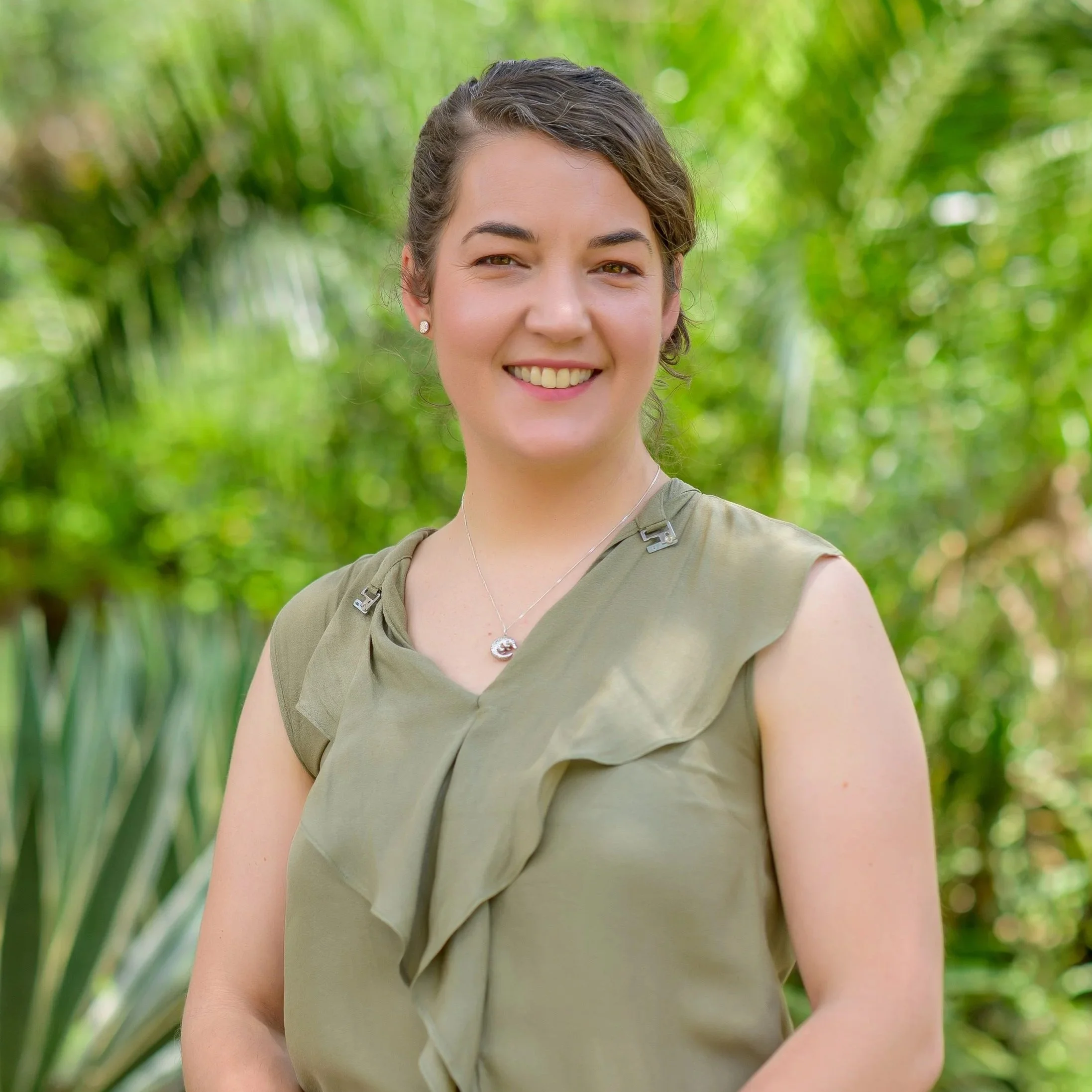
“The most powerful part of the fellowship has been connecting and learning from other members. The ability to hear different experiences and how they have approached and dealt with those challenges has been very beneficial.”
—Nicole Watson, Director of Networks and Membership at Social Value International
-
![]()
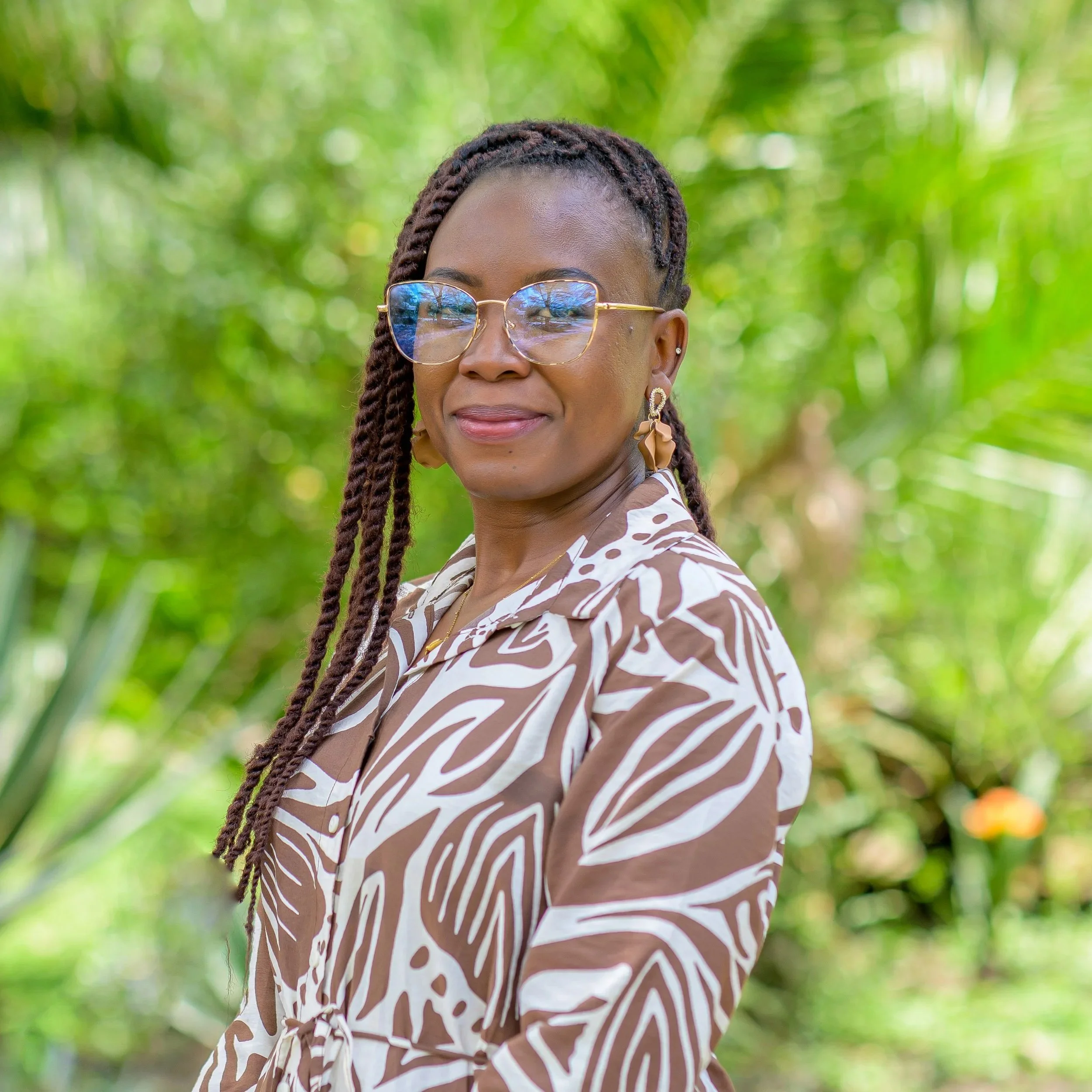
“The coaching sessions offered as part of the fellowship helped me reframe the different elements of my career from separate streams of work to natural extensions of one another.”
—Khatuchi Khasandi, Network Coordinator, Kenya Innovation Ecosystem Funders Forum
-
![]()
“Sharing thoughts with peers who occupy the same role gave me rich perspectives of how to go about my work.”
—Beverly Ndege, Master Storyteller, Fito Network
-
![]()
“I can bring out difficult conversations and navigate them with care, understanding how what is happening can hurt someone else. In a collaborative space it must be safe for everyone. People thanked me for it and said it felt better on the team.”
—Grace Wachori, Africa Regional Director, ANDE (Aspen Network of Development Entrepreneurs)

SIX INSIGHTS FROM YEAR ONE