
Training for Togetherness (Part 3)
Practices for Reviving Social Intelligence in your Network
By Carri Munn
Summary
In this third article, we explore activities that network leaders can use to meaningfully engage diverse participants in generative conversations—dialogue that builds trust, deepens understanding, and fuels aligned action. We offer descriptions and links to time-tested, practical options that relational leaders can use to intentionally rebuild common social skills.
In Part One, we reflect on how our collective social intelligence has eroded in the face of digital saturation, disconnection, and cultural fragmentation, and why networks can be social dojos: spaces to rebuild the relational capacities we need to thrive together. We introduce five core dimensions of social intelligence as a simple way to understand capacities that support collaboration — Situational radar, Presence, Authenticity, Clarity, and Empathy (SPACE).
In Part Two, we look at what it takes to host a social dojo as a space of intentional practice and how SPACE capacities translate to everyday network practices like listening, translating, weaving, summarizing, and catalyzing action.
Scaling Out
Leaders modelling relational ways of being isn’t enough to transform a group of relative strangers into a creative, resourceful, and resilient community committed to shaping systemic change. To co-create new futures, every node of the network must be capable of coordinating learning, sharing resources, and collaborating well with others.
If we realize that social skills are like muscles that we need to exercise together to become collectively strong, then we need places to work out, places to practice. Well-facilitated impact networks can offer quality containers for gathering to build relationships and relational skills. The practical purpose of a social dojo is to scale out relational capacities from some to many, so that each participant grows their relational skills to be an effective player in an interconnected web of relations.
Walking into any gym, you can expect to see basic training equipment like treadmills, free weights, and medicine balls. Trainers will help you find your cardio zone and give you a sequence of common exercises to build your core. But, what can you anticipate arriving at a network gathering? Are there similar practices? Yes, there are.
The field of network practice is new but relationality is not. Cultures the world over have lineages of practices for maintaining social cohesion that support collective thriving. Network leaders are increasingly skillful experience designers who facilitate meaningful, authentic relational spaces that foster collaboration.
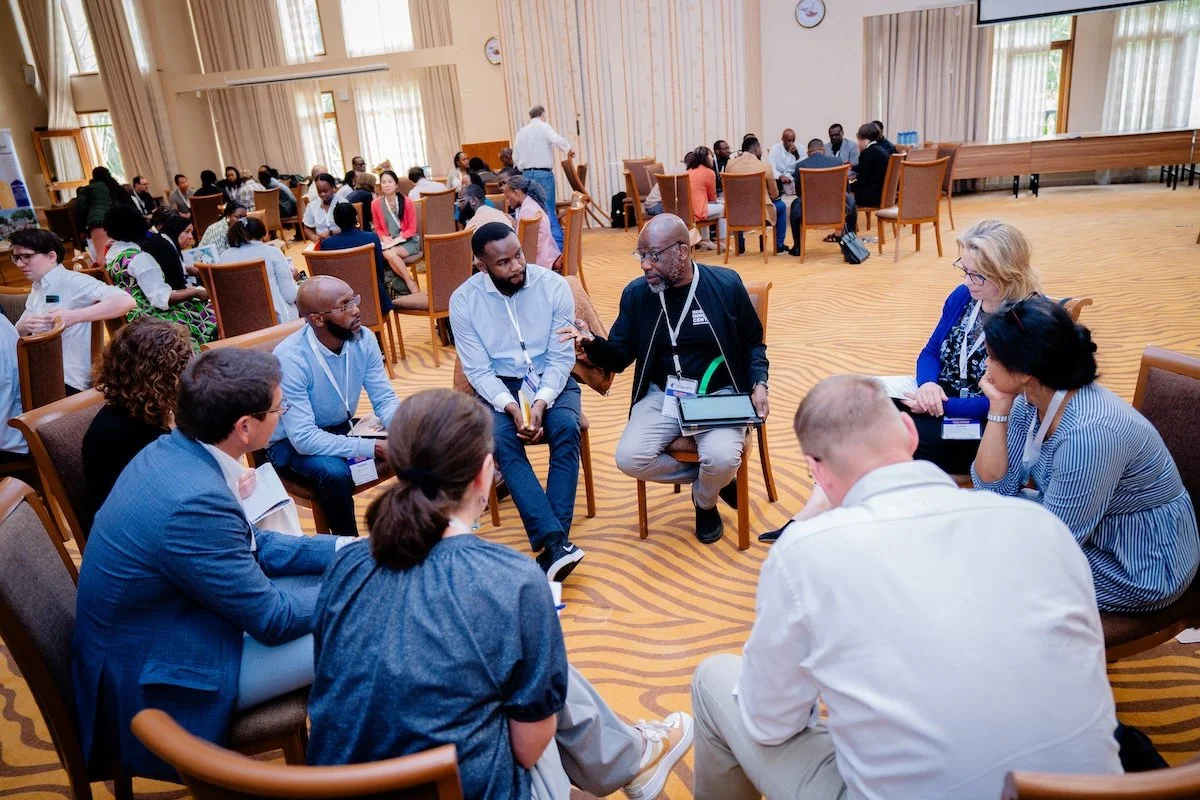
In professional settings, people are accustomed to sharing what they know, their track record, and their next audacious goal. These typical interactions support transactional ways of engaging and miss opportunities to forge deeper connections of care and trust that are the foundation of collaboration.
Intentionally transforming impact networks from a collection of participants into resilient communities able to shape change, requires working different social muscle groups. To move beyond conventional routines, we offer a suite of practices that foster relationality while also building the essential social intelligence to navigate complex challenges together.
Practices to Play With
We suggest two engagement activities for each of Karl Albrecht’s five core dimensions of social intelligence. Simple practices are light touch and relatively quick. Elaborate practices offer greater depth and transformative potential, however, they require more time and preparation to facilitate. Acknowledging that network facilitation is highly contextual, we encourage you to adapt these activities to the relational skillfulness and comfort levels with vulnerability among your network participants. Be courageous and invite people to stretch while moving at the speed of trust.

Situational radar
Activities inviting perceptiveness, adaptability, and understanding social context.
Simple: Improv Games
These are great to start the day, shake things up after a mentally demanding session, or come together after a break. Focus on quick moving, creative games with few instructions. Play for 5-20 minutes. Some of our favorites are here.
Elaborate: Forces at Play in our Ecosystem
This large group conversation brings disparate perspectives together. It is especially helpful for a first-time gathering or rapidly changing field of play. The purpose is to engage in holistic systems thinking for sensemaking and learning. The dialogue builds shared awareness of major forces at play and how dynamics in the ecosystem affect various participants and communities. as a baseline for identifying centers of opportunity. Find a facilitation guide here.
Presence
Activities for expressing ourselves openly and confidently to others.
Simple: Why are you here?
This question is one to use at every gathering to bring folks into conversation about what they care about enough to spend their valuable time outside of their day to day life. This expression of perceived potential, hopeful outcomes, and internal motivation offers important insights into shared values and common ground. We use this question in small groups and often ask folks to share back any commonalities they discovered, so that we can invite others who also share those interests to raise a hand. This enables people to feel seen and offers reflection on group identity.
Elaborate: True Stories with Facts, Feelings, Values
True Stories are so potent at building connections that we bring it into every convening. Focused listening while someone shares their life story not only builds connections but also the experience of being witnessed offers relational healing. Going one step further to practice reflecting facts, feelings, and values can be illuminating for the storyteller. This practice also builds capacity for deep listening that has the potential to expand a participant’s ability to express feelings, validate each other’s experiences, and subsequently bridge differences. View True Stories facilitation guide.
Authenticity
Activities inviting honesty in ways that allow others to trust.
Simple: Stories of Failure and Learning
Inviting people to tell stories of failure and learning encourages the kind of real-talk that disrupts the performative social expectation to present a self-image of success and perfection. To build skills of navigating complexity and ongoing change, it’s important to value continuous learning and experimentation. Sharing stories of what doesn’t work can be framed as an act of generosity that enables everyone to build upon each other’s learnings.
Elaborate: Futures Stories
Future Stories is not only fun, it also helps groups escape the doom loop of analyzing what’s wrong. This activity invites small groups to exercise collective imagination. Part narrative creation and part dreaming, Future Stories unleashes an undeniable sense of positive momentum. Groups invariably report goosebumps as teams share co-created stories with heartfelt descriptions of deeply desired futures and tangible pathways for action. View Future Stories facilitation guide.
Clarity
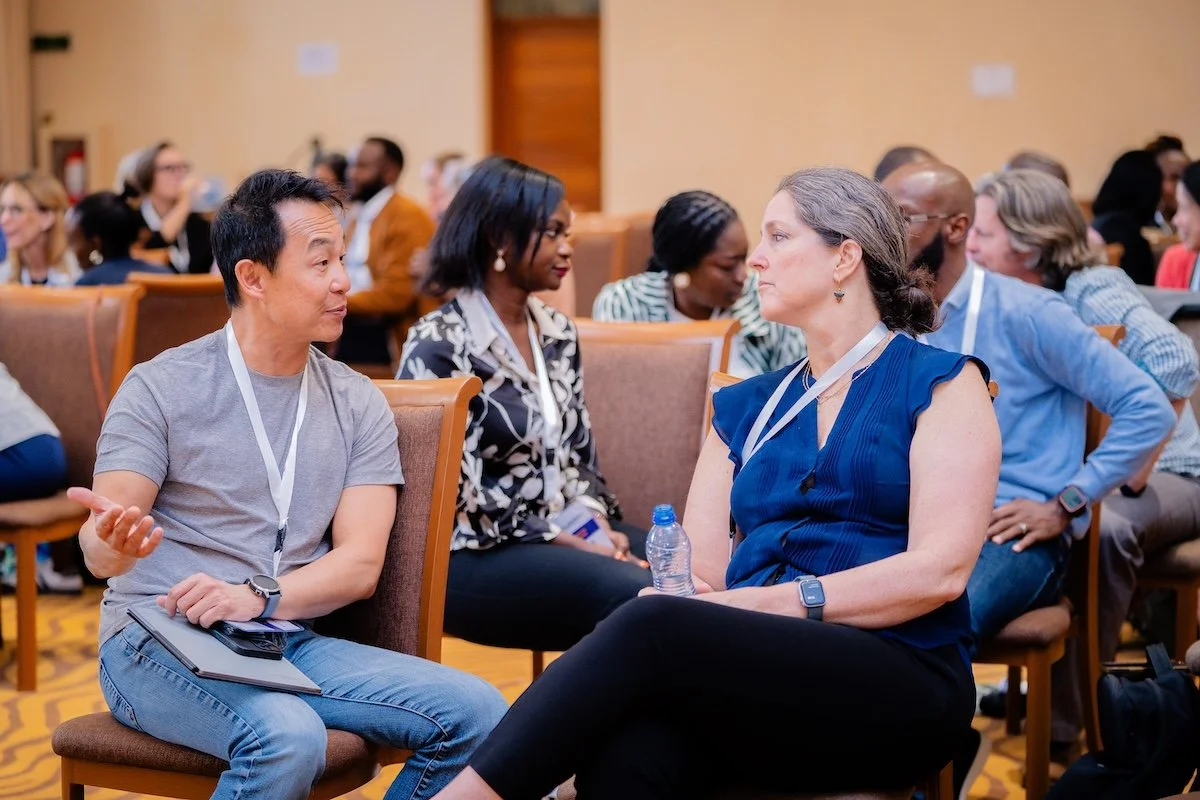
Activities supporting clear self-expression in ways others receive and understand.
Simple: What is reciprocity for you?
Contributions of all kinds are needed to resource networks. This activity centers generosity as a core element of culture, while acknowledging limits. Before jumping into conversation, it can be helpful to begin this activity with a moment of reflection about these questions:
What can you give to the network?
What’s important for you to receive to stay engaged?
Do you have any limitations that are important for others to understand?
The format of 1-2-4-All from Liberating Structures offers a nice way to build momentum as participant contributions stack up. This activity also normalizes the practice of expressing healthy boundaries.
Elaborate: Consent Decision Making
Circle Generation adapted this practice for networks from the great work of colleagues at Circle Forward. Similar to the reciprocity conversation, using consent as a method of collective decision-making invites group awareness of healthy boundaries as the network pursues its purpose. This method frames the well-being of the network and larger ecosystem as the basis of decision-making. Participants are explicitly invited to raise concerns about possible cascading impacts of action under consideration. Engaging in consent conversations activates collective wisdom and validates one of the primary benefits of networks–their diverse perspectives. As participants raise concerns during the consent process, they illuminate various systems dynamics that clarify network members’ shared awareness of broader patterns within the ecosystems in which they are working. Increased pattern awareness and centering well-being for all creates opportunities for shifts toward relational accountability. View Consent Decision Making Guide.
Empathy
Activities inviting people to feel seen, come closer, and move together in harmony.
Simple: How are you arriving?
Intentional opening prompts can offer much more than a random icebreaker. An invitation to share 2-3 different words that describe how you are arriving, followed by the group mirroring back the words, builds group cohesion in several ways. The permission to be honest and vulnerable activates empathy in others. Mirroring back requires listening, and participants feel seen by others. Intentionally witnessing other’s experiences activates mirror neurons which enable powerful biological processes that lead to emotional understanding.
Elaborate: Fishbowl Conversation
A Fishbowl is an interactive way of hosting a large collective conversation where participants take turns contributing and observing. The format encourages careful listening and dynamic participation where speakers build on what has already been said. These highly interactive discussions, involving many participants, can help increase trust, cultivate a shared understanding of complex issues, and bridge cultural divides. If your group has an abundance of goodwill along with a willingness to listen and share, we encourage you to try a Fishbowl at an upcoming gathering. You can learn more about the structure and facilitation here.
Staying with the Practice

Ourselves and many network leaders routinely take social risks by inviting people to put relationships first and connect around what they care about. We hope these ideas inspire you to experiment with activities that allow your network to become a social dojo–a place where we practice healthy relating, and the many good things that come along with healthy relating—like belonging, appreciation, play, creativity, mutual support, and, dare we say, love.
This may be the end of this three part article series, but the learning continues. We continue to hold questions about how to be human together while navigating a complex, changing world.
We’d love to hear from you. Please reach out to share your experiences and offer feedback. We’re happy to translate what we’ve learned from walking alongside many networks to accompany you on your network’s impact journey.