
INSIGHT 1 OF 6 • PATHWAY: INDIVIDUAL
Stewardship enables healthy ecosystems
Reframing leadership from heroic execution to relational stewardship
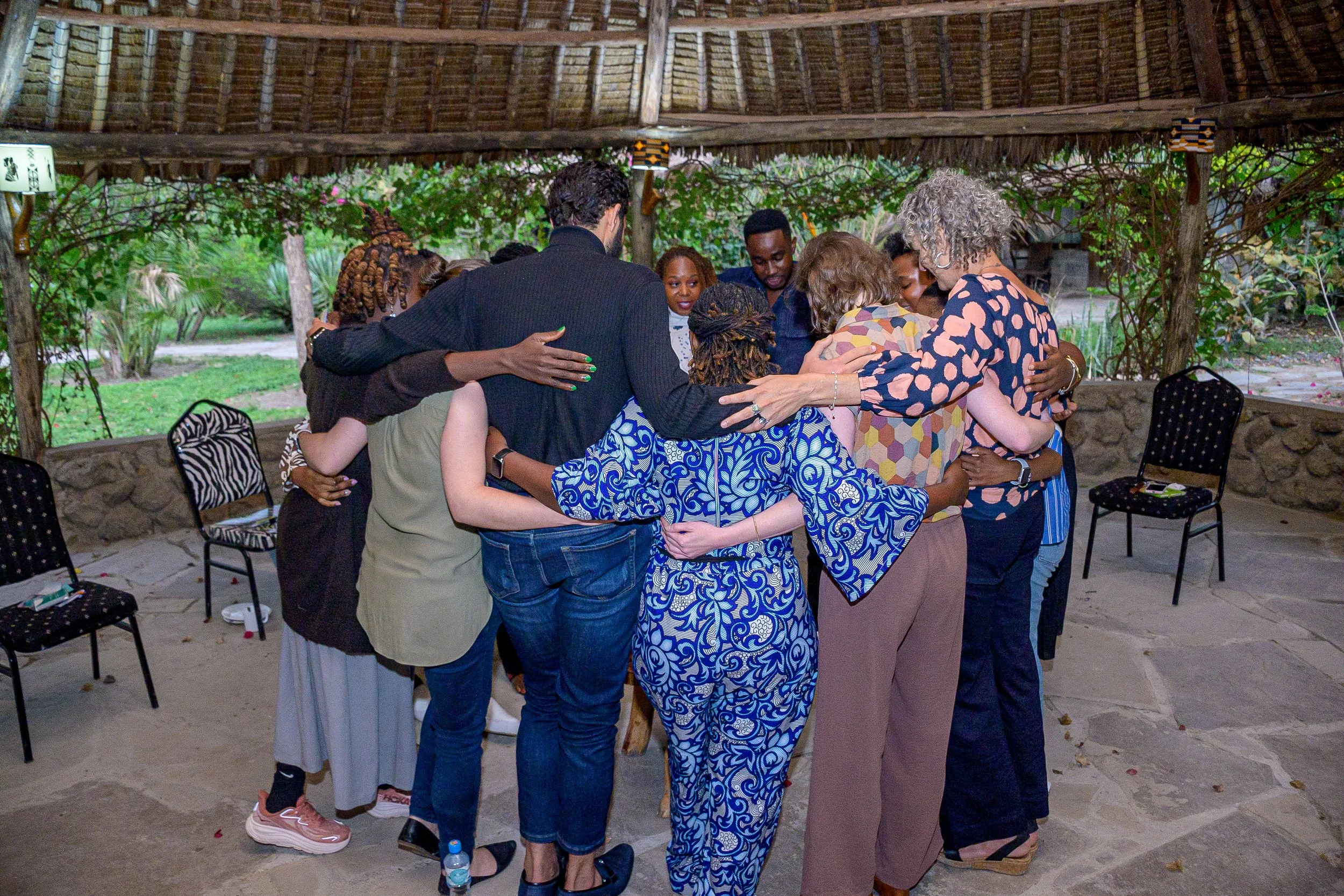
At the beginning of the fellowship, fellows described their leadership purpose largely in terms of function: convening, connecting, mobilizing, and building relationships between others.
By the end, the same fellows described a leadership identity that had turned inward as much as outward. Participating leaders demonstrated significant, cohort-wide growth across foundational capacities and applied capabilities.
They describe a shift from heroic leadership (directing and holding everything themselves) toward intentional eco-stewardship: leading from self-awareness and trusting relational processes without controlling outcomes.
This lasting transformation not only protects stewards from quiet burnout, it also equips them to create cultures of care that invite engagement and foster agency. Together, these create conditions for collaboration that enable network members to collectively become a healthy ecosystem, greater than the sum of its parts.
Cohort-wide growth
in both inner Capacities and applied Capabilities
Largest gains
Network Health & Impact and Creating Conditions for Emergence
#1 → #3
Systemic Awareness dropped in priority as fellows internalized it
EVIDENCE & FINDINGS
What changed
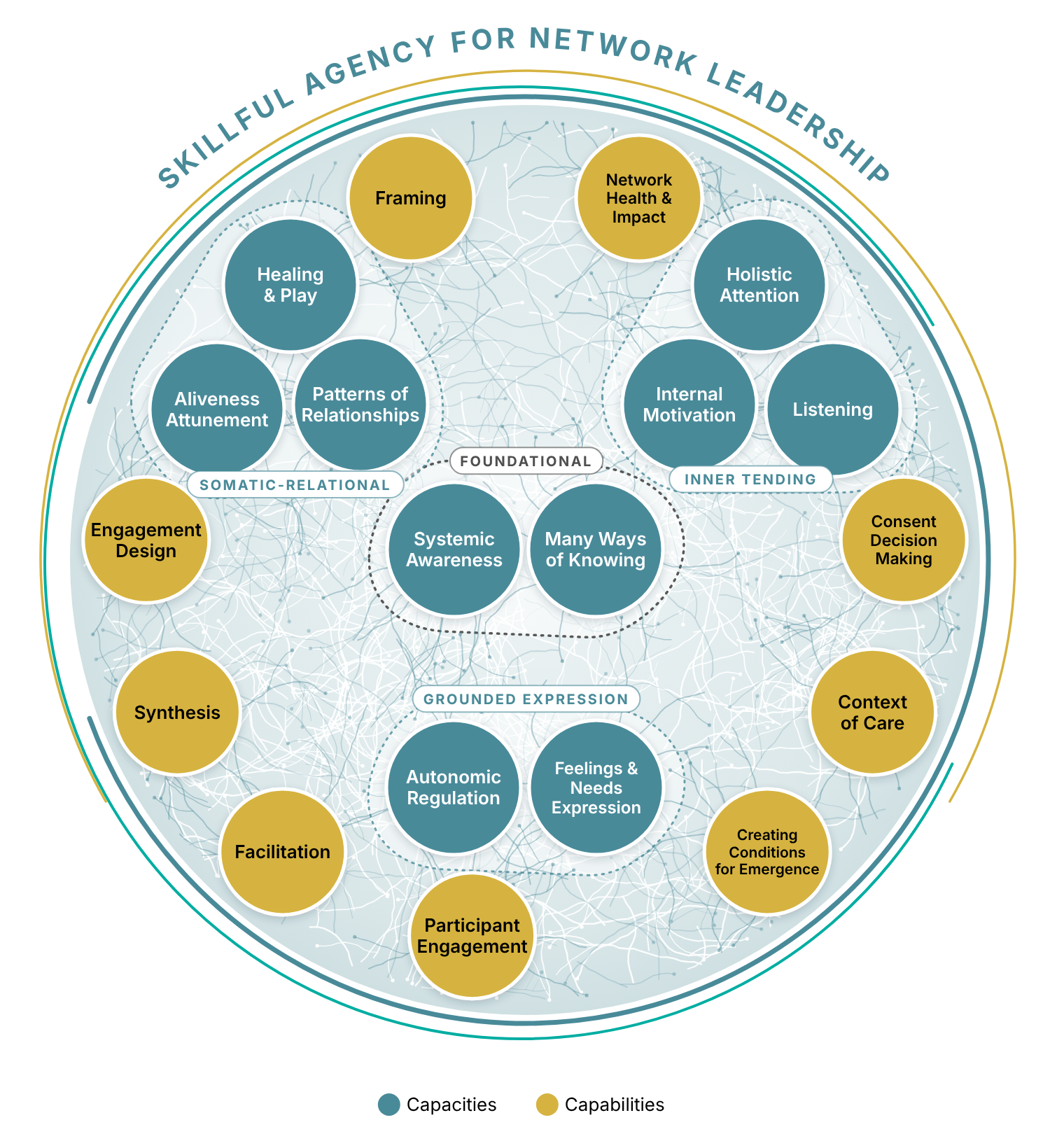
Data shows significant, measurable growth across the cohort in both inner capacities and applied leadership capabilities, with Network Health & Impact and Creating Conditions for Emergence recording the largest gains. These reflect fellows’ practical understanding of how to assess a network’s collective capacity for learning and action, and how to orchestrate the ecosystem so that members create impact together.
Fellows described a profound shift in leadership identity: from idealizing self-sufficiency to stewarding group cohesion and generativity, and from tracking outputs to assessing value creation. They highlight the importance of living systems principles in understanding leadership as flow and responsiveness, not control. They also point to being more comfortable acknowledging and addressing power dynamics, a key aspect of ecosystem stewardship.
In accord with this shift in identity, we observed Systemic Awareness and Many Ways of Knowing decline in relative importance to fellows, which we interpret as evidence that these capacities were internalized. Prominent growth edges at the beginning became embodied, and capacities initially deemed less important became priorities for future growth.
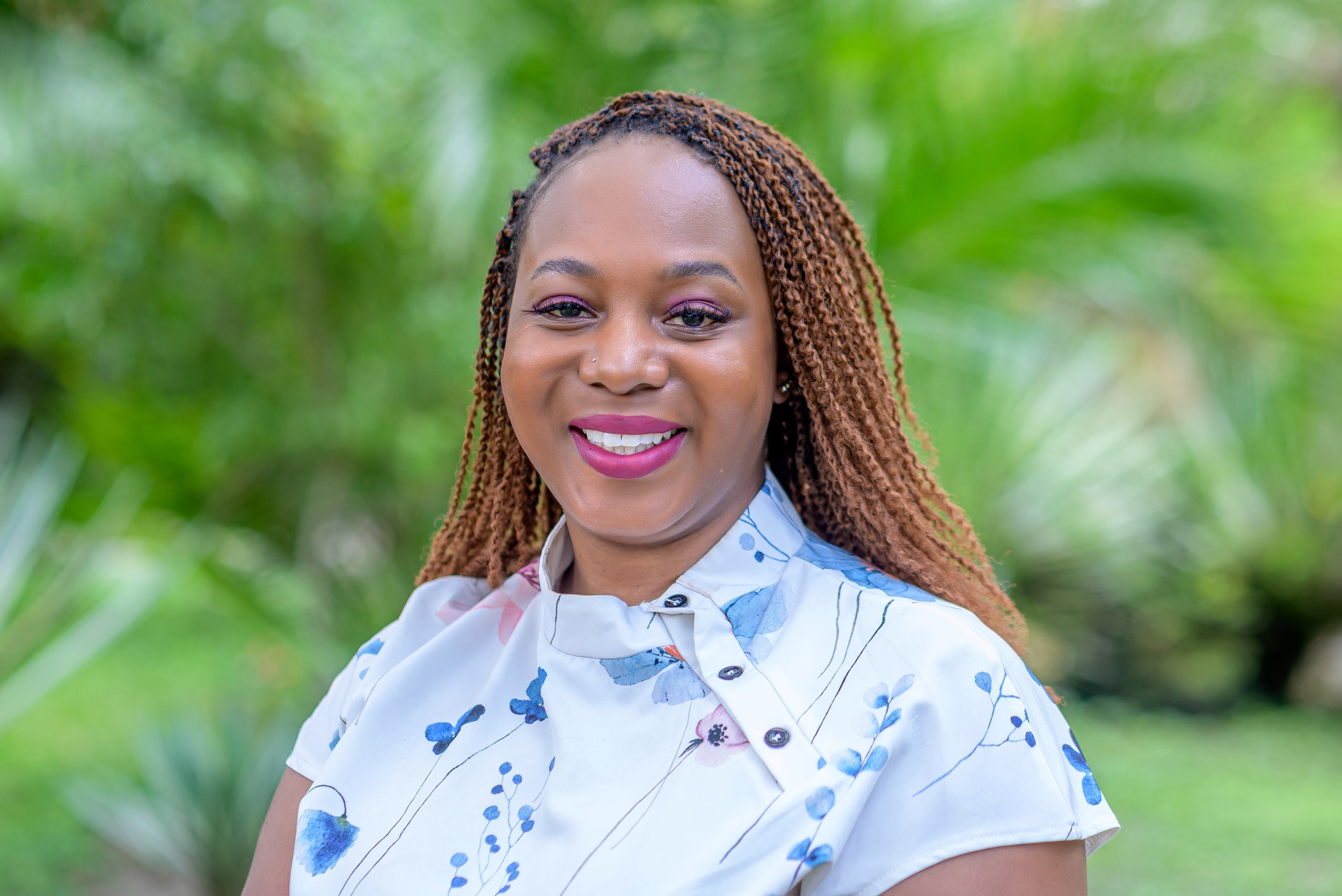
“My perspective evolved from seeing leadership as directing people and activities to understanding it as creating spaces for collaboration, trust, and collective growth.”
—Tendai Mugabe, ORGREASONING
How it happened
The fellowship placed a strong focus on the two foundational capacities, Systemic Awareness and Many Ways of Knowing, throughout the journey. Starting with the first convening, we used valuable in-person learning time to connect these capacities to living systems principles.
We invited fellows to use art to depict the larger forces at play within and around their networks. We told stories describing how connections and communications form feedback loops and support information flow between people, the network, and the ecosystem. By consistently modeling methods for inviting many ways of knowing, we expanded fellows’ range of ways to invite engagement in their networks.
Growth in the Foundational capacities alongside the Somatic-Relational cluster (Aliveness Attunement, Healing & Play, Patterns of Relationships) enabled fellows to move away from the burden of heroic execution (“doing and holding everything alone”) to become stewards of the creativity, commitment, and generosity in their networks.
MEANING FOR THE FUTURE
Why it lasts, and what it makes possible
Shifts in mindset, capacities, and capabilities represent a profound internal transformation. Having “seen into” and actively embodied relationality through lived practice, leaders cross an experiential threshold that is virtually impossible to “unsee” or undo. This lasting expansion of skillful agency protects network leaders from depletion and simultaneously invites member contributions that give leaders more time to be thoughtful ecosystem stewards. Shifting focus from delivering value to members to strategically orchestrating the ecosystem is the move that activates “relational DNA” and generates the synergies that lead to network effects.
Culture holds over time. What we embody, hold together, and agree to prioritize has a great effect on the results we see. For this shift to last, within fellows and within their networks, it’s important to move from individual practice to shared culture. When participating in an ecology of relationships becomes normal in networks, the field may see the emergence of collective capacities that make it possible to orchestrate across networks. Broad diffusion of ecosystem stewardship practices invites the possibility of coordinating at the scales necessary for collective flourishing.
In their own words…
-
![]()
“I’ve come to see leadership more as stewardship. As a way for me to create the conditions for others to contribute, lead, and own the vision.”
—Yvonne Okafor, ORG
-
![]()
“I have become more comfortable with emergence and intentionally leveraging the collective wisdom of participants in the room, rather than carrying the full burden of figuring everything out by myself.”
—Khatuchi Khasandi, ORG
-
![]()
“My role is to hold space for others to lead and intentionally shape conditions where networks can come alive, trust can deepen, and collective action can emerge with greater purpose and impact.”
—Ledama Masidza, ORG
-
![]()
“A key learning for me was understanding how to structure governance in our network in such a way that our members can lead the network themselves. It is member-led and decentralised.”
—Elizabeth Howard, ORG


SIX INSIGHTS FROM YEAR ONE