
Presence Requires Absence: How Learning to Step Back Made Me a Better Network Leader
By Khatuchi Khasandi
Network Leader, Kenya Innovation Ecosystem Funders Forum
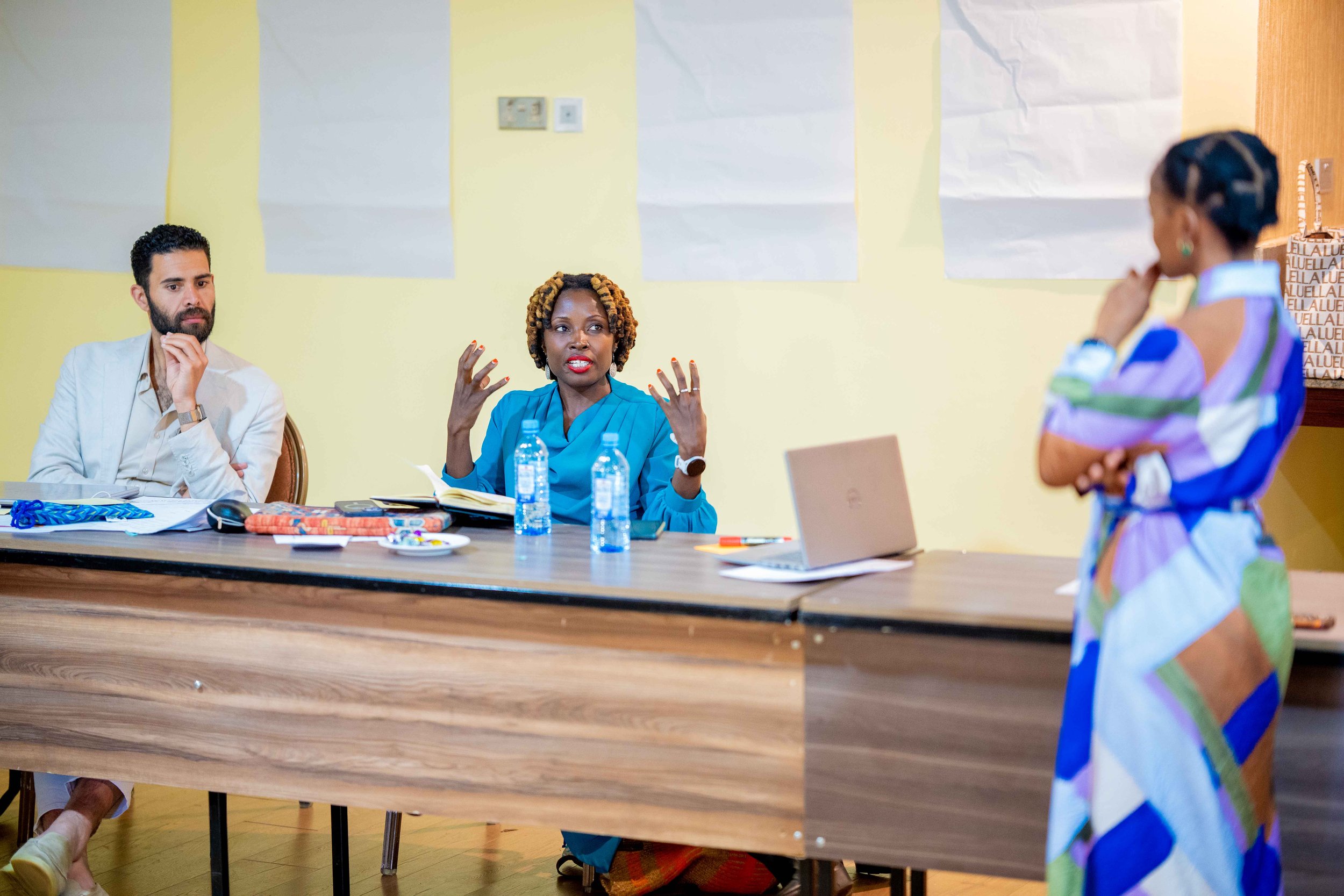
Last Friday, I sat staring thoughtfully at my laptop screen. On the other side was my Fellowship Guide, Oggy Nduka. It was our final reflection session after ten months in the inaugural Bopa DiPeo Fellowship by Circle Generation.
As always, he began with a simple question.
"How was the final fellowship convening?"
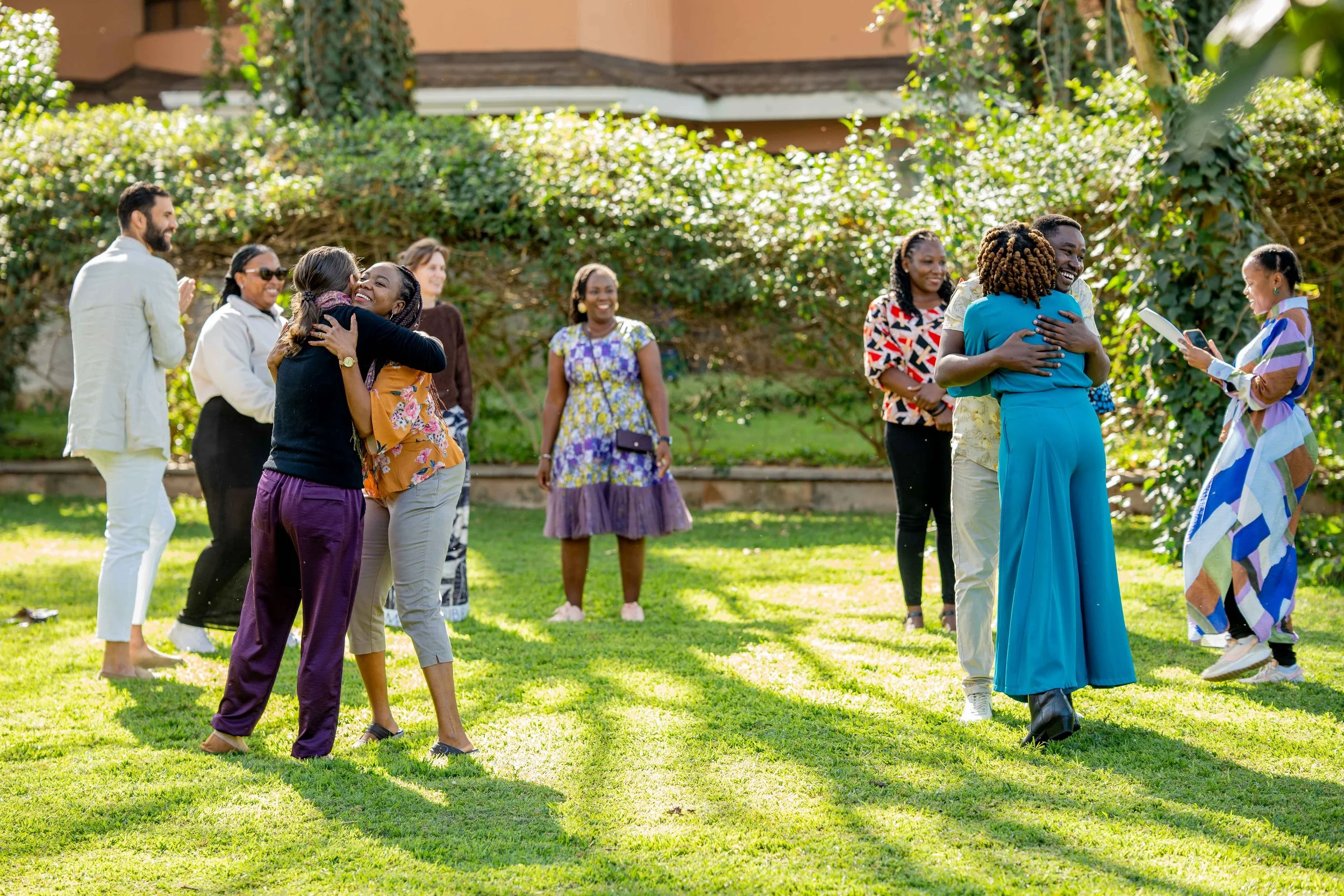
I enthusiastically described what an incredible experience it had been. Unlike the first in-person convening at the beginning of the fellowship, I made a deliberate decision to be fully present throughout the two days of our final convening. I wasn't thinking about emails, work deadlines, or what needed to happen when I returned home. Instead, I gave myself permission to simply be there—to listen, engage, reflect, and connect with the people around me.
That single decision transformed my entire experience.
When I finished speaking, Oggy smiled and said something that caught me by surprise.
"One of the biggest changes I have seen in you towards the end of this fellowship is your presence. You're more engaged. You're more relaxed. What changed?"
His question made me realize that the answer had been unfolding throughout the entire fellowship journey.
Why I Joined the Fellowship
I coordinate the Kenya Innovation Ecosystem Funders Forum (KIEFF), a network of development partners, foundations, philanthropic organizations, and domestic capital providers driving a more resilient, inclusive, and productive innovation ecosystem in Kenya through the strategic alignment of catalytic capital.
“Yet collaboration does not simply happen because people agree it is important. It requires intentional leadership.”
Like many network leaders, I often found the work of leading a network isolating. Networks are often supported by lean teams, and their success depends largely on the relationships, judgment, and lived experience of the coordinator rather than established playbooks or formal structures.
As global development funding continues to shrink, collaboration has become one of the most common solutions proposed to address fragmented resources. Yet collaboration does not simply happen because people agree it is important.
It requires intentional leadership.
It requires relationships.
It requires trust.
Most importantly, it requires people who know how to steward networks.
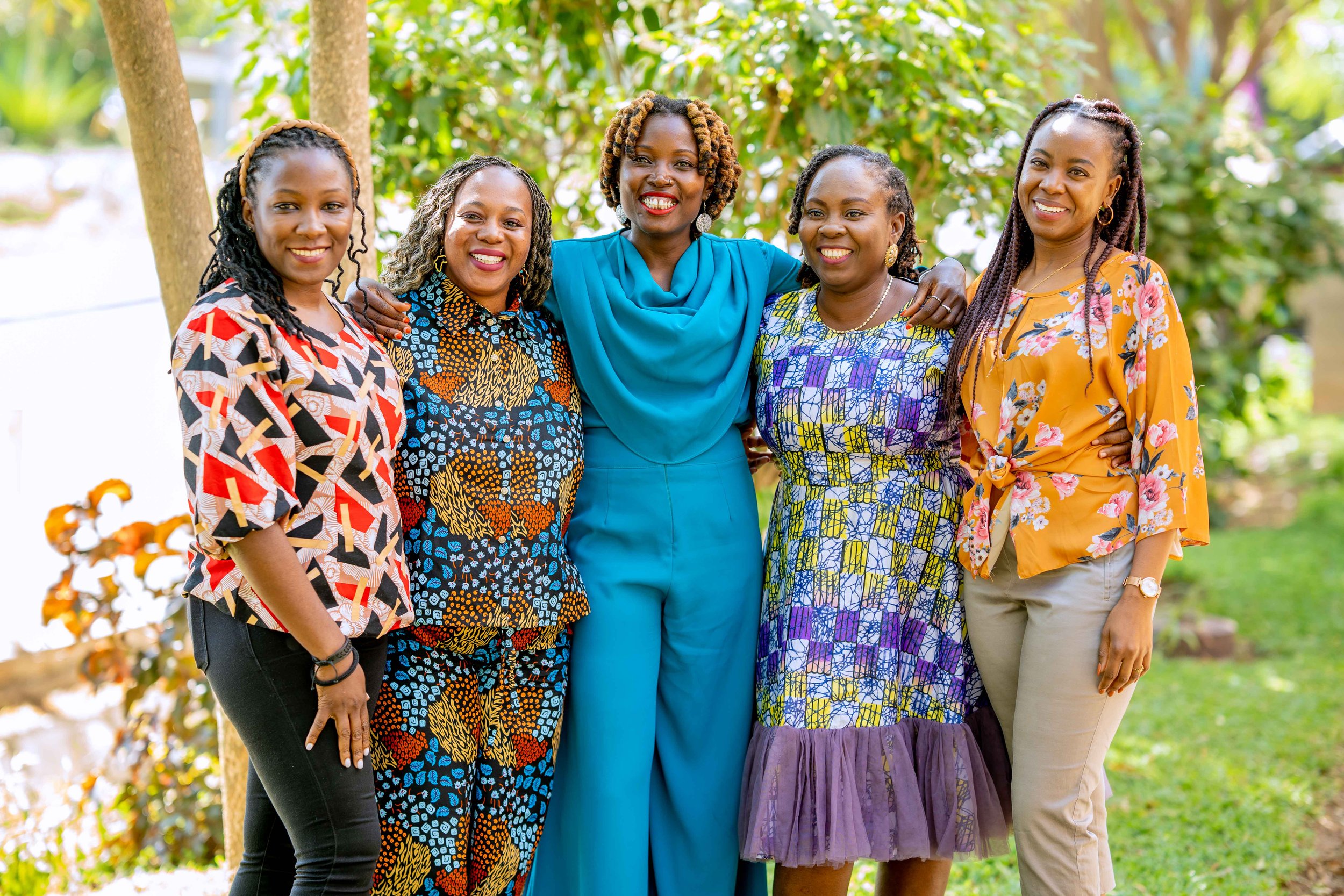
I joined the Bopa DiPeo Fellowship because I wanted to connect with practitioners who understood the realities of network leadership, were committed to learning together, and were advancing the field for the next generation of network leaders.
The First Mirror
“‘By doing almost everything yourself, in what ways are you becoming a barrier to the growth of the network instead of an enabler of it?’”
Each fellow was paired with a Fellowship Guide and had access to advisors who served as mentors and strategic thought partners.
During one of my first advisory sessions, I received feedback that has stayed with me ever since.
I was encouraged to make the work of coordinating KIEFF more visible to its members so they could better understand how to support it. Then my advisor, Sean Andrew, asked a question that challenged me deeply:
"By doing almost everything yourself, in what ways are you becoming a barrier to the growth of the network instead of an enabler of it?"
As someone who loves journaling, I spent considerable time reflecting on that question.
Initially, my conclusion was straightforward: I needed to delegate more.
But there was a problem.
KIEFF was still an emerging network, and I felt we were building the operational model as we grew. I convinced myself that delegation would create more work than it solved.
Looking back, I realize I was treating delegation as a task rather than a leadership practice. I was avoiding the short-term effort of building shared ownership, without recognizing the long-term cost of doing everything myself.
The Second Mirror
Later in the fellowship, another advisor, Lenka Chobotova, introduced me to an idea that completely shifted my thinking.
"Presence cannot exist without absence."
To be fully present where I was most needed, I first had to identify what I needed to become absent from.
She then invited me to reflect on another difficult question: "What function is your constant busyness serving?"
That question forced me to confront something uncomfortable.
Perhaps I wasn't overwhelmed simply because there was too much work. Perhaps I was overwhelmed because I had become indispensable to too many activities.
Again, I identified areas where I needed to step back. Yet translating that insight into practice still felt difficult.
The Shift
Everything changed when KIEFF began a strategy development process earlier this year.
Rather than developing the strategy internally, we engaged a facilitator and worked through the process together as members. Together, we clarified our purpose, agreed on strategic priorities, defined governance structures, and developed a shared operational plan.
One of the most significant outcomes was the development of the KIEFF Member Charter. For the first time, everyone had a shared understanding of KIEFF's purpose, vision, membership structure, strategic priorities, and the role each member would play in stewarding the network.
We also agreed that each of our three strategic priorities would be championed by a member, while my role as Network Coordinator would be to facilitate, connect, and support their leadership—not replace it.
Almost immediately, I noticed a shift.
One member took the lead in coordinating KIEFF's participation in the Science, Technology, Research and Innovation for Society (STRI) Week 2026. We co-created the deliverables, but the member owned the process while I focused on managing the relationship with the State Department for Science, Research and Innovation (SDSRI).
The same pattern is now evident across our other two strategic priorities. KIEFF members are leading the co-creation of a financing data dashboard and the co-design of a funding gap analysis for science-based ventures in Kenya, while I focus on connecting, coordinating, and enabling their success.
There were moments when members experienced delays, and every instinct in me wanted to step in and take over. Before the fellowship, I probably would have. Instead, I paused. I reflected on what was driving my urge to "fix" the situation and chose to step back.
The members found solutions. Despite a few delays, the work kept moving forward. More importantly, ownership shifted. Members brought richer ideas, assumed greater responsibility, and developed a deeper appreciation of what it takes to steward a network. In some cases, they even invited colleagues to contribute, strengthening delivery without me ever asking them to.
And something unexpected happened…
What Presence Made Possible
Because I was no longer carrying every activity myself, I finally had the time and mental space to focus on work that only I could do.
“Instead of being the centre of the network, I was becoming part of its infrastructure.”
I began prioritizing relationship-building with local philanthropy organizations—something our members had long identified as a strategic priority for advancing the long-term sovereignty and financial sustainability of Kenya's innovation ecosystem.
KIEFF members also began reaching out to one another directly, strengthening relationships without relying on me to facilitate every interaction. They invited their colleagues into KIEFF conversations, gradually embedding the network within their own institutions.
Instead of being the centre of the network, I was becoming part of its infrastructure.
The network was becoming stronger precisely because it needed me less.
What I'm Taking Forward
One of the greatest lessons from the Bopa DiPeo Fellowship is that growing a network is not about increasing the capacity of the coordinator alone; it is about increasing the capacity of everyone who participates in the network.
“In doing so, I discovered that the role of a network leader is not to be indispensable—it is to make the network itself more capable.”
That begins with creating a shared understanding of the network's purpose, how it operates, and what it takes to steward it successfully.
When members understand the work, they know how to contribute. When the coordinator understands what only they can uniquely do, they know what to delegate. When both happen together, the network becomes more resilient, more distributed, and ultimately more impactful.
Ironically, becoming more present in my leadership first required learning where to be absent. By stepping back, I created space for others to step forward.
In doing so, I discovered that the role of a network leader is not to be indispensable—it is to make the network itself more capable.
That may be the most valuable lesson I will carry from the Bopa DiPeo Fellowship—not only for my own leadership, but for every network I have and will have the privilege to serve.

Khatuchi Khasandi is a Network Coordinator at the Kenya Innovation Ecosystem Funders Forum, based in Nairobi, Kenya. With many funders facing resource cuts, Khatuchi sees her work as an opportunity to bring funders together to strategically leverage resources and complement each other’s efforts toward implementing the Kenya Innovation Masterplan. She believes strengthening innovation ecosystems is fundamental to addressing systemic challenges such as climate change, youth employment, and inclusivity—issues no single funder can solve alone.
Her experience with networks such as ANDE and the Fito Network demonstrated how a relational approach can drive collective action, even though the process is complex and long-term. She values engaging with peer networks of leaders, such as those in this fellowship, for mutual learning, staying abreast of emerging developments, contributing to field-building, and accessing a lifelong support system.
Through this fellowship, Khatuchi hopes to articulate and elevate the often-invisible work of network leaders and contribute to the professionalization and institutionalization of this career path. Her vision is that future practitioners will have the capacity, recognition, and support systems they need to thrive.
She loves the outdoors and, this year, is running her first two international marathons and climbing Mt. Kenya for the second time.